


Brain-smart organisations – Interview with Karl Ståhl, State Epizootiologist at the National Veterinary Institute, SVA.
Karl, what is your general view on the theme of the interview, Brain-strong organisations? What does that mean to you?
First, I think about the organisation's mission, which is fundamental and clear. Then I think of SVA as a brain-powered organisation, regardless of how it is organised, whether it is optimal or not. It is a brain-powered organisation because it is based on people's expertise and capacity. We have just under 400 employees, of whom more than 100 have PhDs. So I think of it as brain-powered in that sense, simply because of the human capital and how we collectively understand and approach our mission. One example of this is that our staff turnover is low and that people from all over the world seek us out and stay with us, which also makes us brain-powered.
You could say that we are an organisation with a strong brain because all our people are well trained in our mission, we ”train” in how to deal with crises, for example, and we have high capacity and high competence in what we do. In addition to this, we are also organised in a way that provides a solid and resilient ”order”.
In your work, you deal with complex situations that are sometimes stressful. How do you create a working environment where people can still think clearly and collaborate effectively?
Yes, actually, it is perhaps in stressful situations that we think more clearly. These situations are usually very stimulating. It feels like this is what we are here for; you feel that you are doing something useful and you can really see the benefit of what you are doing. This is what we are here to deal with and, of course, to prevent through our long-term work.
Then it can be more difficult, with the pressure of the situation. There is a kind of hangover when you return to your daily work, with everything you have left behind to deal with the emergency. After all, it is the long term that lays the foundation for dealing with emergency situations.
Our mission involves a great deal of research projects and routine work. So the challenge is to ensure that the organisation does not become exhausted from handling day-to-day work while also dealing with more urgent situations. I think that is our challenge. How to ensure that our minds remain strong over time in relation to different situations and that we have enough people to carry out our mission.
So you could say that our mission contributes to psychological security within the organisation because we are very committed to what we do, which also creates a kind of psychological security throughout the entire organisation.
In research and crisis management environments, it can feel risky to say ’I don’t know’, for example during an epidemic, in a TV interview or similar situations. How do you work to create psychological security in your teams and in collaborations across government agencies?
I think we are quite good at saying that we cannot answer questions or that we do not know. We are well trained, organised and experienced in handling this task; it is part of our core mission to be good at this.
The person asking the question naturally knows less than we do, so our job is to know more than the general public and then communicate that with the uncertainty that surrounds the situation.
We collaborate, practise and evaluate situations together with other authorities to understand how we can do things better.
What habits or working methods do you think are most important for you and your colleagues to stay mentally sharp over time?
Time is a significant factor for us. Time to develop and maintain expertise, time for recovery, our capacity to handle different situations.
Clarity is also important; it is essential that we as managers demonstrate and are clear about what it takes to be an expert. It is not necessary to know everything, but one should know enough to be able to answer the questions that come our way.
Basically, you need to feel that what you do is enjoyable and stimulating, even if it is personally challenging. That's what I believe. Perhaps the most important thing is that you have to enjoy it, understand that what you do is important, and feel that you are making a difference.
What advice would you give to an organisation that wants to become more learning-oriented, more collaborative, i.e. more brain-powered and less stress-driven?
Start with the assignment, emphasise competence, ability and that the job is stimulating. Then it's a matter of not attaching prestige to what you do; after all, we are all dependent on each other in an organisation to achieve what we stand for and what we want to accomplish.
At SVA, for example, we are not here for our own sake, but rather we strive towards something else: healthy animals and people. We often say: safe, healthy animals – safe people. That is our benchmark and what we work towards.
Finally, what is the most enjoyable aspect of your work?
Apart from when things happen, ”laughter”, it is that we are competent in doing our job and that we are proud of the difference we make.
From all of us at YesP, thank you very much for joining us, Karl!
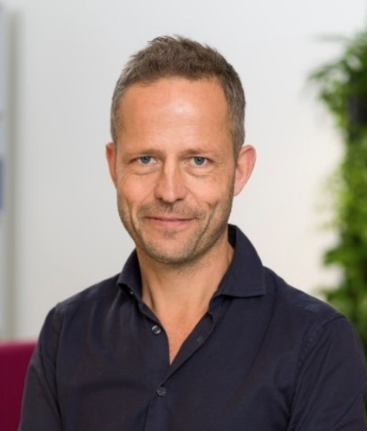

Karl Ståhl was appointed State Epizootiologist at the SVA in 2021, which means he is the highest-ranking official in matters relating to epidemics, such as outbreaks of avian influenza. The position requires a background as a veterinarian, a PhD and professorial competence, as well as extensive experience working with infectious animal diseases. Karl has been working in this field for the past 25 years, both in Sweden and internationally.