


Leadership in Six Minutes – Björn Sjöström’s theories on leading people
How does one summarise an entire career in leadership in just a few principles?
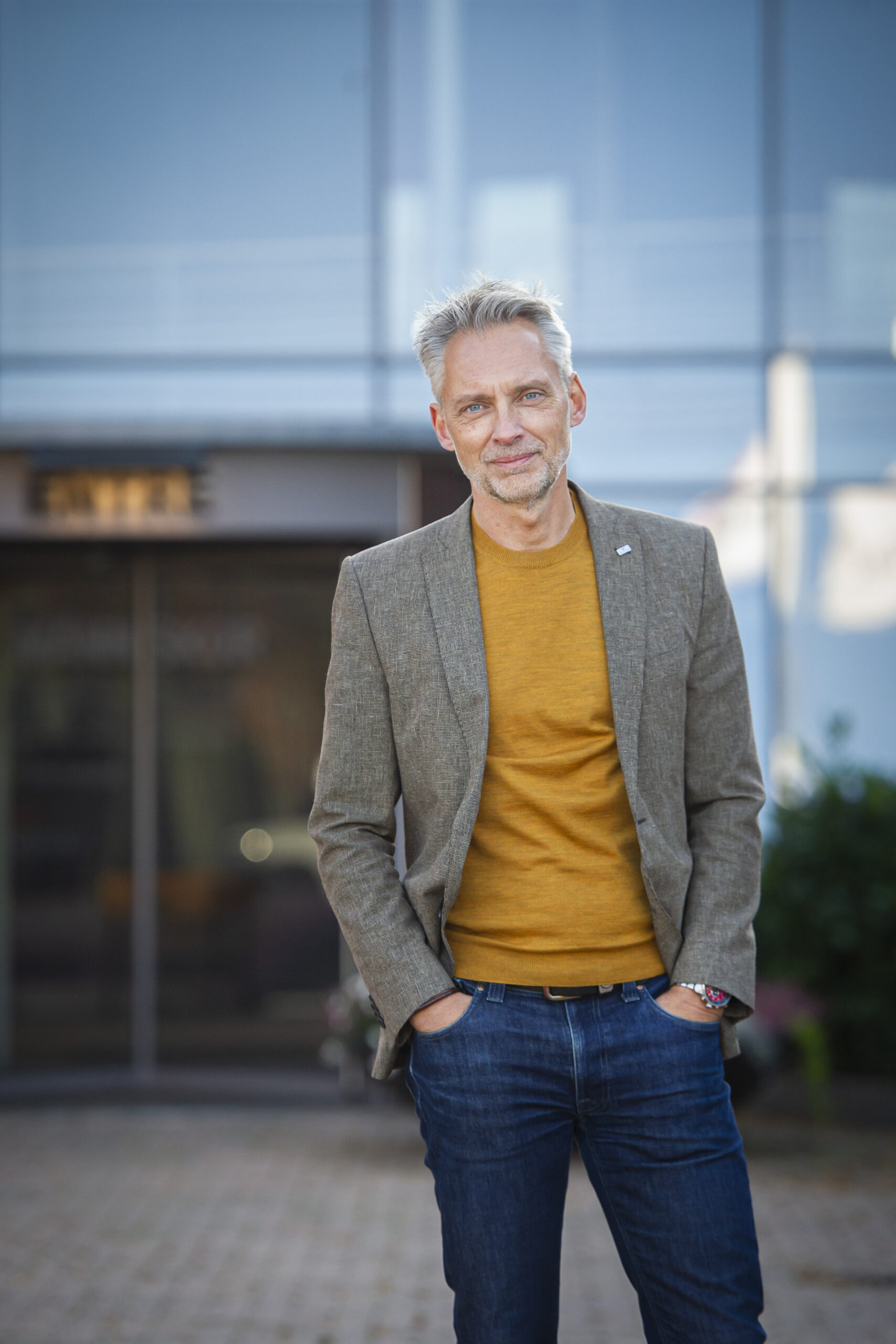
We met Björn Sjöström, CEO of Varberg Energi, who recently summarised his experiences for his managers in *Leadership by Björn – In Six Minutes*.
After several decades as a manager and leader, backed by countless training courses, books and experiences, Björn has arrived at a number of simple, clear principles. Not as a new model or theory, but as a way of describing what actually works in practice.
– Somewhere along the way, you end up filtering out a lot of what’s interesting but perhaps not so useful in everyday life.
'This is really just my personal summary of what I think works,' says Björn Sjöström.
The dualism of leadership
A central concept in Björn’s view of leadership is what he calls ambidexterity the ability to deal with contradictions and to consider multiple perspectives simultaneously.
In some situations, a leader needs to be firm and decisive. In others, they need to be open, vulnerable and responsive. And these situations can change rapidly.
He illustrates this with two examples: the chainmail and the armour.
Sometimes, a leader must be able to protect themselves and the organisation from opposition and difficult situations. At other times, the opposite is required – showing one’s true self and building relationships.
‘It’s not enough to always be tough. But you can’t just be soft either. The interesting thing is knowing when to use which approach,’ says Björn.
That balance is one of the things that makes leadership both difficult and fascinating.
“Badger bite” – the art of holding on
One of the most memorable phrases in Björn’s presentation is the concept of “badger bite”.
It sounds brutal, but it’s actually all about perseverance.
– It hardly matters which strategy you choose, as long as you stick to it. What we usually fail at is moving on to the next thing too quickly.
In organisations, particularly when it comes to culture or behaviour, change takes a long time. Sometimes much longer than one might think. That is why leadership is often about carry out, persevere and follow up until the change has really taken hold.
‘We’re far too quick to think that it’s all sorted now. But what really matters is what actually gets done,’ he says.
Deliver – otherwise there’s no business
Another of Björn’s statements is as simple as it is provocative:
“Deliver or die.”
Behind this wording lies a simple reality.
If an organisation does not deliver value to its customers, it will not survive in the long run. But that does not mean that results are at odds with people or culture. Quite the contrary.
– All the other values are important too. But without delivery, there is no business. That’s why we have to manage both at the same time, says Björn.
Trust and openness
Several of Björn’s principles also relate to relationships. One of them is trust to dare to live with uncertainty and give people responsibility.
Another is simple but difficult to put into practice:
“Say it or forget it.”
It’s about having the courage to say what you’re thinking whilst you’re there, rather than talking about it afterwards.
“If people say what they think, the work becomes so much easier. Then we can make decisions and move forward,” says Björn.
The leader as a tool
Despite all the models and theories, Björn believes that leadership is, at its core, about something very simple: the leader themselves.
‘The only real tool you have is yourself and your ability to build relationships,’ he says. This applies regardless of sector, generation or organisation. Technology, markets and ways of working are changing rapidly, but people change much more slowly.
That is why much of the essence of leadership remains the same today as it was hundreds of years ago.
A personal summary
Björn’s “six minutes of leadership” is not intended as a theory.
Rather, as a starting point for discussion. Each principle opens up a wider discussion about leadership, culture and behaviour.
‘It’s really just a matter of taking a peek behind the door. Behind every picture lie several hours of conversation,’ he says.
Perhaps that is precisely why his theories stick in people’s minds. They are easy to remember but difficult to master.
Many thanks, Björn, for sharing your experience!
/Stefan Almér YesP